

.png)

If you've searched this before landing here, you already know the problem: every mattress brand calls itself "orthopedic," every listing promises spinal alignment, and none of them explain what that actually means for your back at 3am. So let's skip the marketing language and start with what's actually been tested.
Here's something most mattress sites won't tell you: there's no certification body that approves a mattress as "orthopedic." No orthopedic association tests and stamps these products. Any manufacturer can put the word on a label, whether the mattress is genuinely engineered for spinal support or just firm enough to sound convincing.
That doesn't mean the category is meaningless. It means you have to look past the label and check what's actually inside the mattress: the firmness, the layering, and whether the materials are built to hold that support over years, not months.
For decades, the default advice was "get a firm mattress if your back hurts." That advice is outdated.
A systematic review of controlled trials on mattress design and back pain found that medium-firm mattresses improved sleep quality and reduced back pain more effectively than firm surfaces in patients with chronic low back pain, with pain reductions in the range of roughly 48% in some trials. A separate randomized, double-blind, multicentre trial comparing mattress firmness for chronic non-specific low back pain reached a similar conclusion: participants on medium-firm mattresses saw better outcomes than those on firm ones, including less pain on waking.
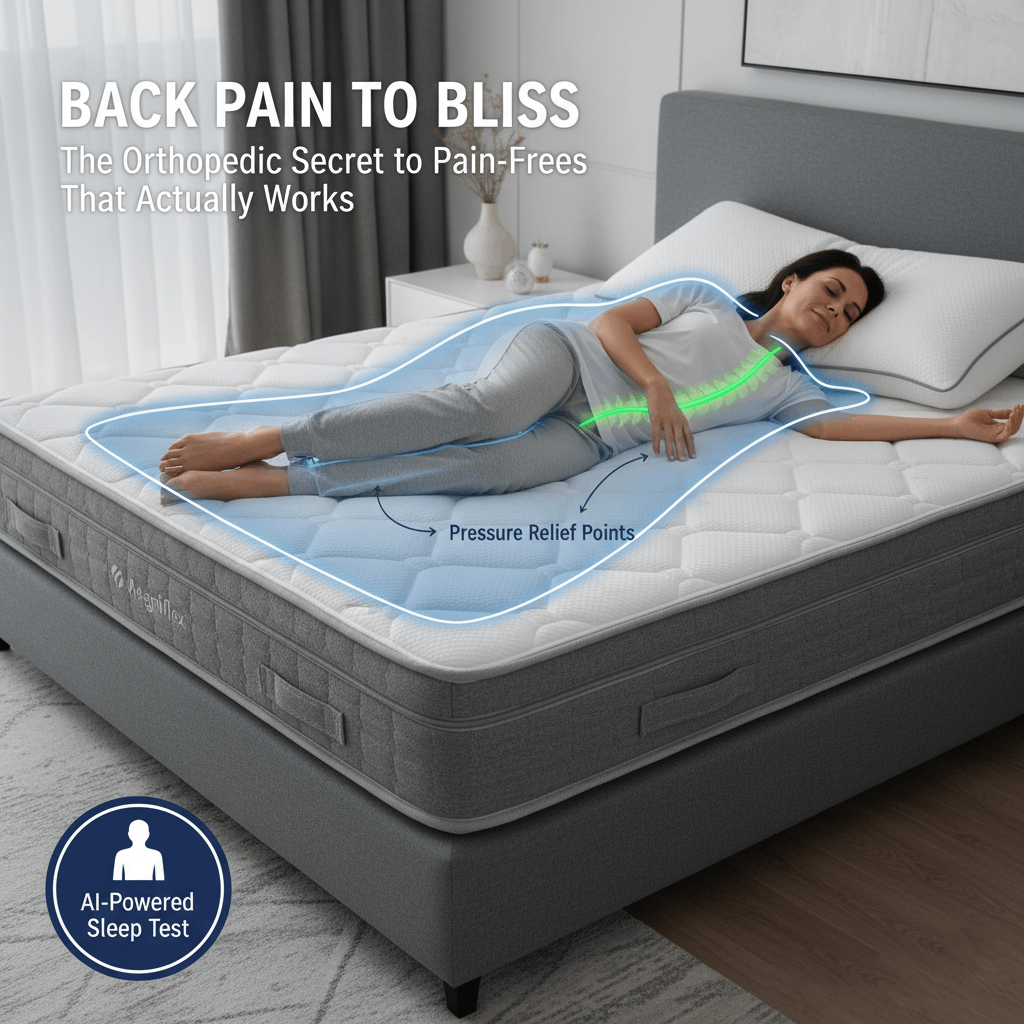
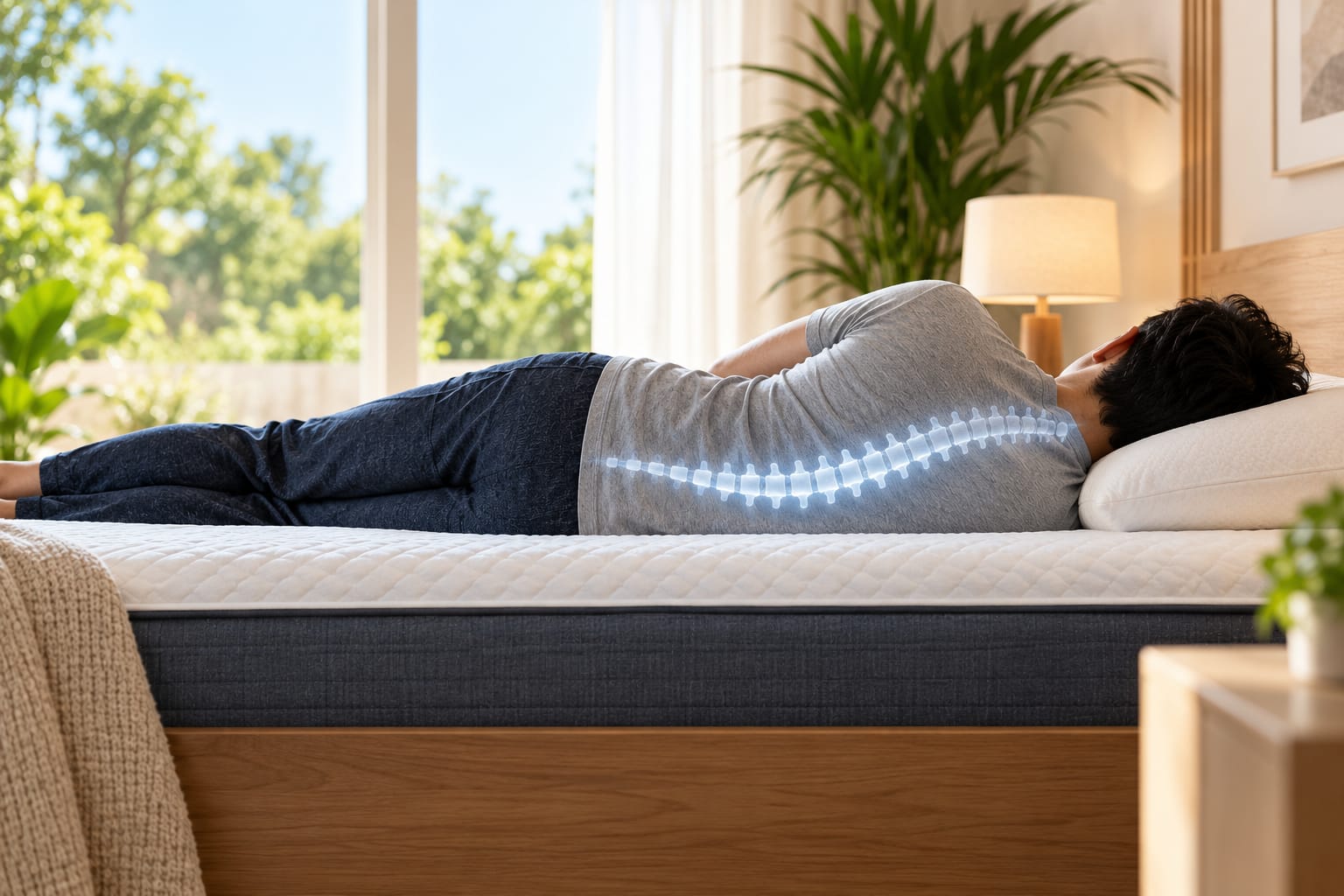
The reasoning makes sense once you think about it in terms of spinal geometry, not just softness. Lying down, your spine holds a gentle S-curve, the same curve you have standing with good posture. A mattress that's too firm doesn't compress under your lower back, so your lumbar spine hangs unsupported. A mattress that's too soft lets your hips sink lower than your shoulders, twisting the pelvis and flattening that curve the other way. Medium-firm surfaces are the ones most likely to hold the curve without letting anything sag.
There's a second finding worth knowing: firmness that adjusts to the sleeper (through zoned support or layered construction rather than one uniform slab) tends to outperform mattresses with a single firmness level throughout. One alignment study measured the angle of the lower spine on different surfaces and found zonal support produced a noticeably smaller (better) misalignment angle than either firm or soft uniform surfaces.
What this means practically: skip anything marketed purely as "extra firm for back pain." Look for medium-firm construction with layered support: a firmer base that won't sag, paired with a comfort layer that contours enough to keep your spine level.
Strip away the marketing copy and four things determine whether a mattress will help a bad back:
Firmness in the medium-firm to firm range. Not the softest option in the catalog, not the hardest. If a brand only sells one firmness level, ask what it measures on a 1-10 scale. You're generally looking at 5-7.
Layered construction, not a single foam block. A support base that resists sagging, topped with a comfort layer that relieves pressure at the shoulders and hips. Single-density foam mattresses compress unevenly over time and start creating exactly the sagging that causes pain in the first place.
Breathability. Foam mattresses that don't allow airflow trap heat, and a hot mattress disrupts sleep regardless of how well it supports your spine. Look for ventilated or perforated foam layers.
Time to adjust. Every clinical trial that showed a real benefit from switching mattresses ran for weeks, not nights. Give a new mattress 3-4 weeks before deciding it isn't working. Your body needs to adapt, and a two-night trial won't tell you anything reliable.
Material safety certification. If you have sensitive skin or allergies, check whether the foams and fabrics are independently tested for harmful substances. OEKO-TEX Class I is the highest rating in that category, and it's worth asking about regardless of which mattress you're considering.
Take the Magniflex Eco Paedic as a working example, since it's built around exactly the layering the research points to.
The construction, top to bottom:
The comfort level sits at Medium Firm to Firm, in line with what the clinical evidence points to for chronic back pain rather than the "as hard as possible" approach older ortho mattresses still push. It's available in Single, Queen, King, and Super King sizes, and it's OEKO-TEX Class I certified, meaning the fabrics are independently tested and free of harmful substances.
Magniflex is a premium mattress brand in India, and the Eco Paedic is manufactured 100% in Italy, not assembled locally from imported components. If you're evaluating any orthopedic mattress, this is a useful mental checklist to run it through: medium-firm range, layered rather than single-density, breathable, certified materials, and a comfort layer you can inspect or replace over time.
Is a firm mattress always better for back pain? No. This is the most common misconception. Research consistently points to medium-firm mattresses outperforming firm ones for chronic low back pain, largely because a very firm surface doesn't support the natural curve of your lower spine while lying down.
How long does it take to feel a difference after switching mattresses? 3-4 weeks. The clinical trials that showed measurable pain reduction ran over several weeks to a few months. Judging a new mattress after a night or two mostly tells you how different it feels, not whether it's actually helping.
What if I have a diagnosed spinal condition, like a herniated disc or spinal stenosis? Talk to your doctor before switching mattresses. A general orthopedic mattress supports normal spinal alignment but isn't a substitute for treatment, and firmness needs can differ significantly with a diagnosed condition.
I'm a side sleeper. Should I still go medium-firm to firm? Not necessarily. Side sleepers often do better on a softer to medium mattress that cradles the shoulder and hip rather than resisting them. The medium-firm-to-firm recommendation is strongest for back and stomach sleepers, and for side sleepers it depends more on body weight and personal comfort.
Does body weight change which firmness I need? Yes. Lighter sleepers (under roughly 60 kg) tend to do better on the softer end of medium, while heavier sleepers usually need a firmer surface to avoid sinking too deep and losing spinal support.
Can a mattress alone fix chronic back pain? No. A well-matched mattress removes one source of nightly strain on your spine, but it works alongside, not instead of, things like posture, activity levels, and any treatment plan from a doctor or physiotherapist.
Skip anything sold purely on the word "orthopedic" and check the actual construction: medium-firm, layered, breathable, and durable enough to hold that support for years. Whichever mattress you land on, run it through that checklist before you buy, and give it a few weeks before deciding it's the one.